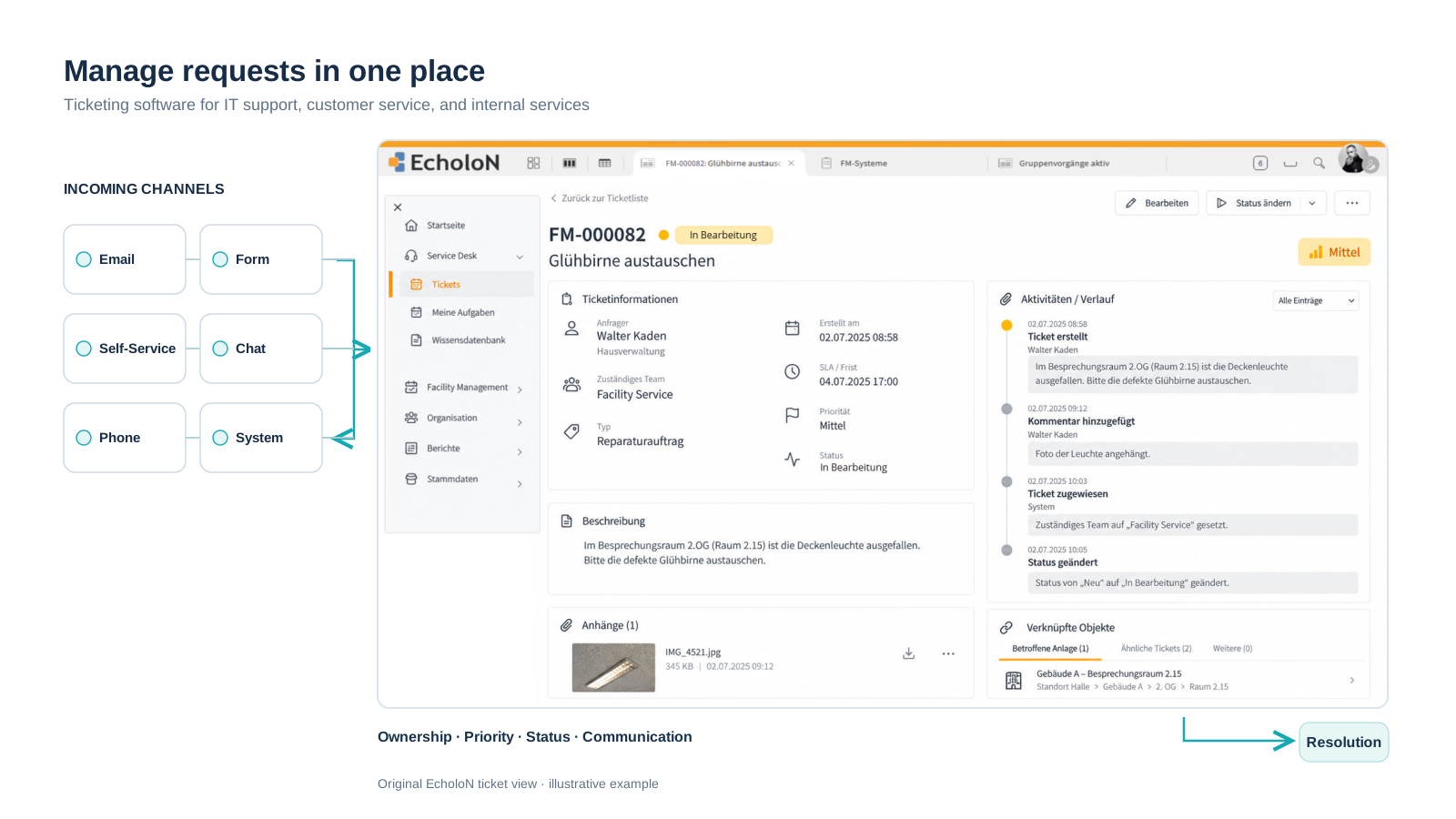
With the EcholoN ticketing system software, you can capture requests via email, web forms, or self-service; through phone calls; and from integrated systems, and consolidate them into central tickets. Categories, priorities, responsibilities, processing statuses, communication, and solutions remain directly linked to the respective case.
EcholoN can start as a clearly defined ticketing system. As requirements grow, additional functions and processes for help desk, service desk, IT service management, customer service, or other departments can be added on the same technical foundation.
400+ customers · Average of 15.7 years in use · Made in Germany · Cloud/SaaS, on-premises, managed service, or hybrid
What is a ticket system?
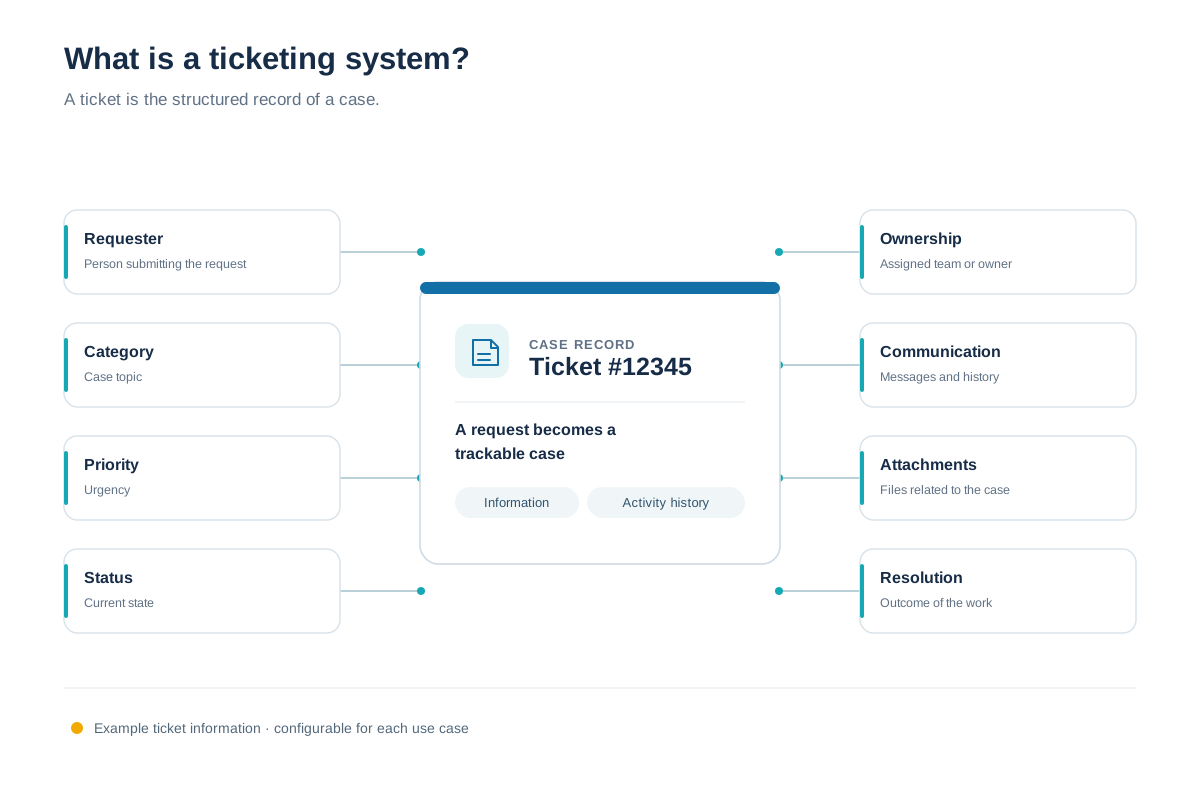
A ticket system is software designed for the structured recording, management, and tracking of requests and processes. Each request is created as a ticket and linked to the information needed to process it—such as the requester, category, priority, status, responsibility, communication, deadlines, attachments, and solution.
This allows teams to answer the following questions at any time:
- Which requests are still open?
- Who is responsible?
- What is the ticket’s priority and current status?
- What has already been reviewed, communicated, or completed?
- What solution has been documented?
Ticket systems are suitable for IT support, customer service, technical support, and internal services. What matters most is not just digital recording, but a reliable workflow from receipt to the documented outcome.
When Companies Need a Ticket System

A ticketing system becomes necessary when requests can no longer be reliably managed through personal or shared email inboxes, spreadsheets, and individual agreements.
Typical signs include:
- Responsibilities must be repeatedly clarified manually.
- Staff members have varying levels of information.
- Deadlines, follow-up questions, or resubmissions are tracked separately.
- Handoffs between teams are not fully traceable.
- Recurring solutions remain the property of individual employees.
- Ticket volume, processing times, and frequent topics can only be analyzed with significant effort.
- Customers or employees cannot track the status of their request themselves.
EcholoN consolidates receipt, ticket data, processing, and results into a single shared process:
How ticketing works with EcholoN
-
1. Create a request
Reports are submitted for processing via email, a form, a self-service portal, by phone, or from an integrated system, for example.
-
2. Structure the ticket
Configurable screens and forms capture the required information, such as organization, category, product, device, location, or attachments.
-
3. Determine priority and responsibility
Rules and existing ticket information support the classification and assignment of tickets to employees, groups, or organizational units.
-
4. Manage Processing
Tasks, follow-up questions, notifications, reminders, time targets, and escalations can—depending on the edition and configuration—be supported by workflows.
-
5. Leverage Knowledge and Communication
Responses, actions, and available solution information remain linked to the ticket.
-
6. Closure and Analysis
The resolution is documented; structured ticket data is then available for reports and process improvements.
What EcholoN Provides as a Ticketing System
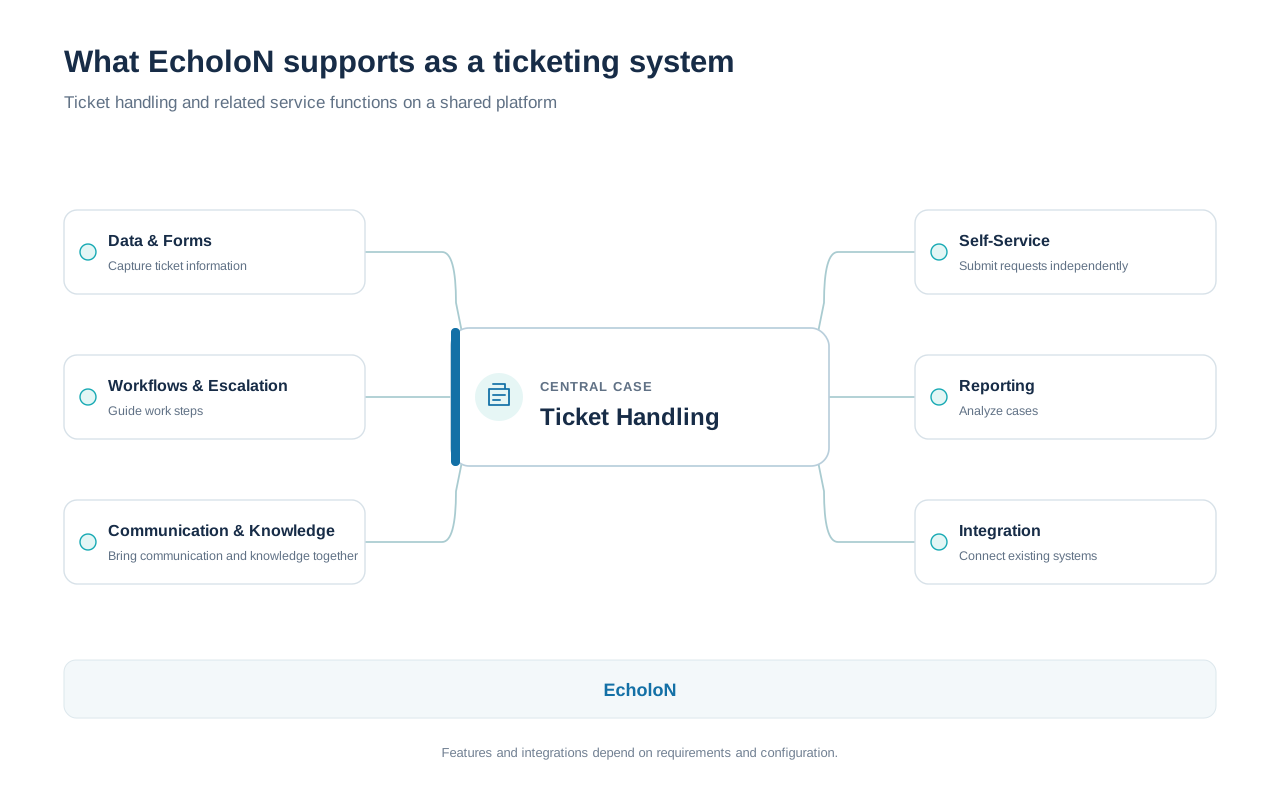
Ticket Data, Forms, and Complete Case Files
EcholoN integrates case management with the data required for each specific use case. In addition to standard information such as status, category, priority, and responsibility, company-specific fields, forms, and drop-down options can be configured.
Inquirers, organizations, products, devices, locations, contracts, attachments, activities, communication, and related cases can be made available within the respective processing context. Which data is actually used depends on the process and the selected configuration.
Assignment, Workflows, Time Targets, and Escalations
Tickets can be assigned to employees, groups, or organizational units. Rules and workflows can support assignment, tasks, notifications, follow-ups, status changes, and other processing steps.
If contractual or internal service targets are relevant, time limits and escalation paths can be incorporated into the process design. The specific scope depends on the edition, configuration, and agreed-upon use case.
Learn more about technical process control with the EcholoN Workflow Engine.
Communication and Knowledge Directly Linked to the Ticket
Inquiries, responses, and processing information remain associated with the case. When cases are transferred, this ensures transparency regarding what information is already available and what steps have been taken.
Agents can also access shared knowledge content and documented solutions. This makes experiential knowledge reusable rather than leaving it exclusively with individual employees. The EcholoN Knowledge Base provides in-depth information.
Self-Service for Employees, Customers, and Partners
Through the EcholoN Self-Service Portal, authorized users can submit requests in a structured manner, track the processing status, and access provided knowledge content. Roles, forms, and permissions control which information and services are available to each target group.
Reporting Based on Structured Ticket Data
Dashboards and reports can visualize, among other things, ticket volume, open cases, categories, priorities, responsibilities, processing statuses, timelines, escalations, and recurring issues.
The concrete benefit stems from consistent data collection: Only when categories, statuses, and processing information are maintained uniformly do analyses provide a reliable basis for operational management and process improvement.
Interfaces and Data Integration
Information from existing applications is often required for ticket processing. EcholoN can be connected to existing data sources and systems via available APIs, web services, connectors, and project-specific integrations.
The appropriate connection depends on the target system, the required data, the direction of data transfer, and the requirements for data timeliness. For data import and exchange, options include the EcholoN Data Integration and the EcholoN SAP Connection.
Ticket System for IT, Customer Service, and Internal Services
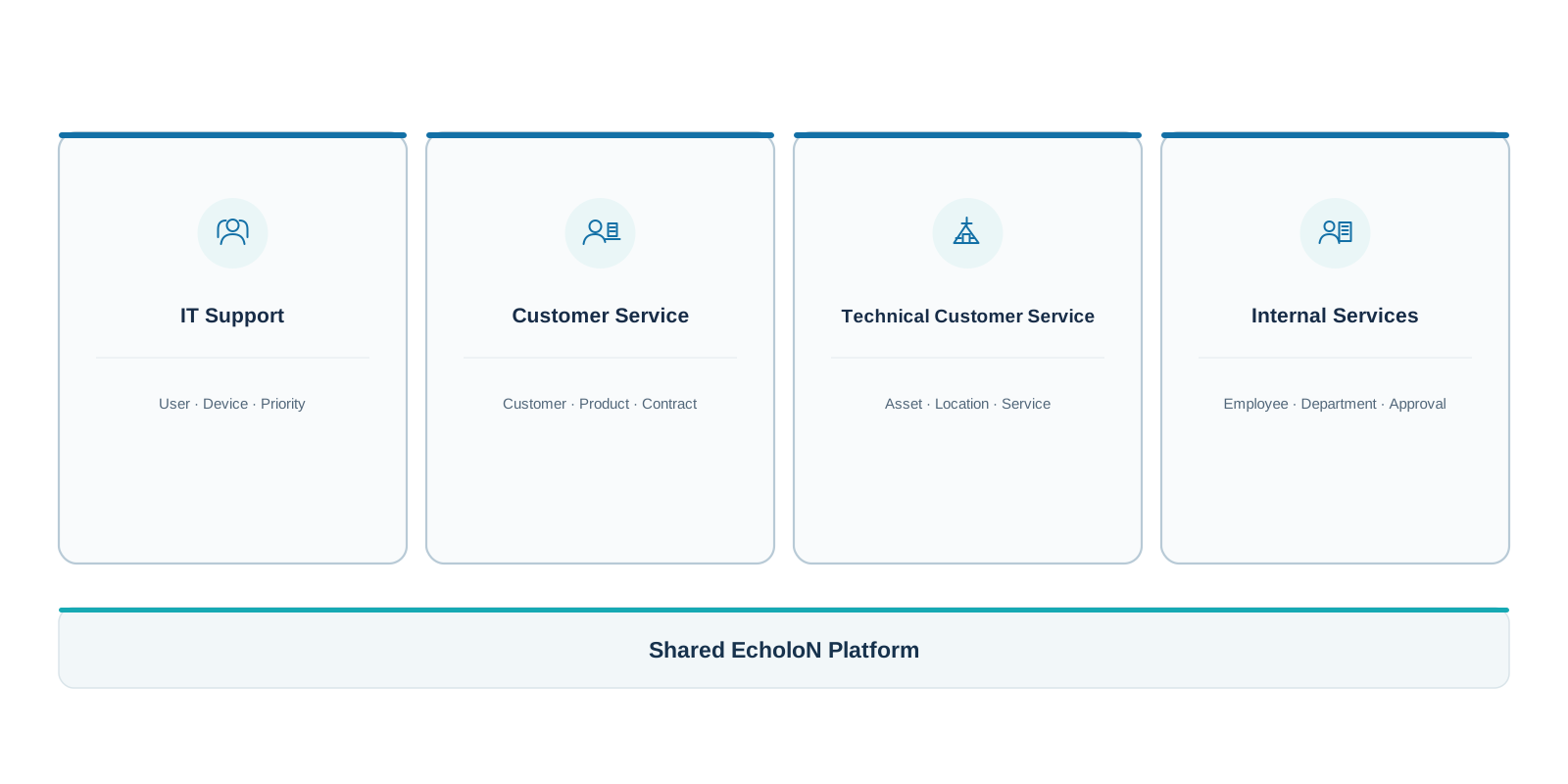
| Scope of Use | Typical Tickets | Additional Relevant Information |
|---|---|---|
| IT-Support | Outages, user questions, access or software requests | User, workstation, system, device, category, priority |
| Customer Service | Product questions, complaints, support and service requests | Customer, contact, product, contract, communication, service history |
| Technical Customer Service | Technical malfunctions, repair and maintenance needs | Device, equipment, location, serial number, spare parts and service information |
| Interne Services | Requests to HR, Facility Management, Purchasing, or Administration | Employee, Location, Department, Approval, Role, Processing Path |
Custom forms, categories, roles, and workflows can be used for each application area, while maintaining a unified platform. For more detailed requirements regarding external services, visit the EcholoN Customer Service Software page. For cross-departmental services, explore Enterprise Service Management with EcholoN.
EcholoN Ticket System in Practical Use

The Bünting Group implemented EcholoN as its central service platform. According to the customer reference, the self-service portal was rolled out to 210 stores. Employees can use it to create tickets and track their processing status. This example demonstrates how ticketing, self-service, knowledge management, and other service processes can be integrated into a single solution.

At Hamburg Messe und Congress, EcholoN is used for IT service management. According to the customer reference, approximately 99 percent of inquiries are submitted directly via EcholoN. As a result, the platform has become the established digital interface between users and the service organization.
HORNBACH replaced a previously used proprietary ticket system with the process-oriented EcholoN service management platform. This use case illustrates a typical evolutionary step: Structured ticket processing remains important but is now integrated into broader IT and service processes.
What Sets EcholoN Apart from a Standalone Ticketing Tool
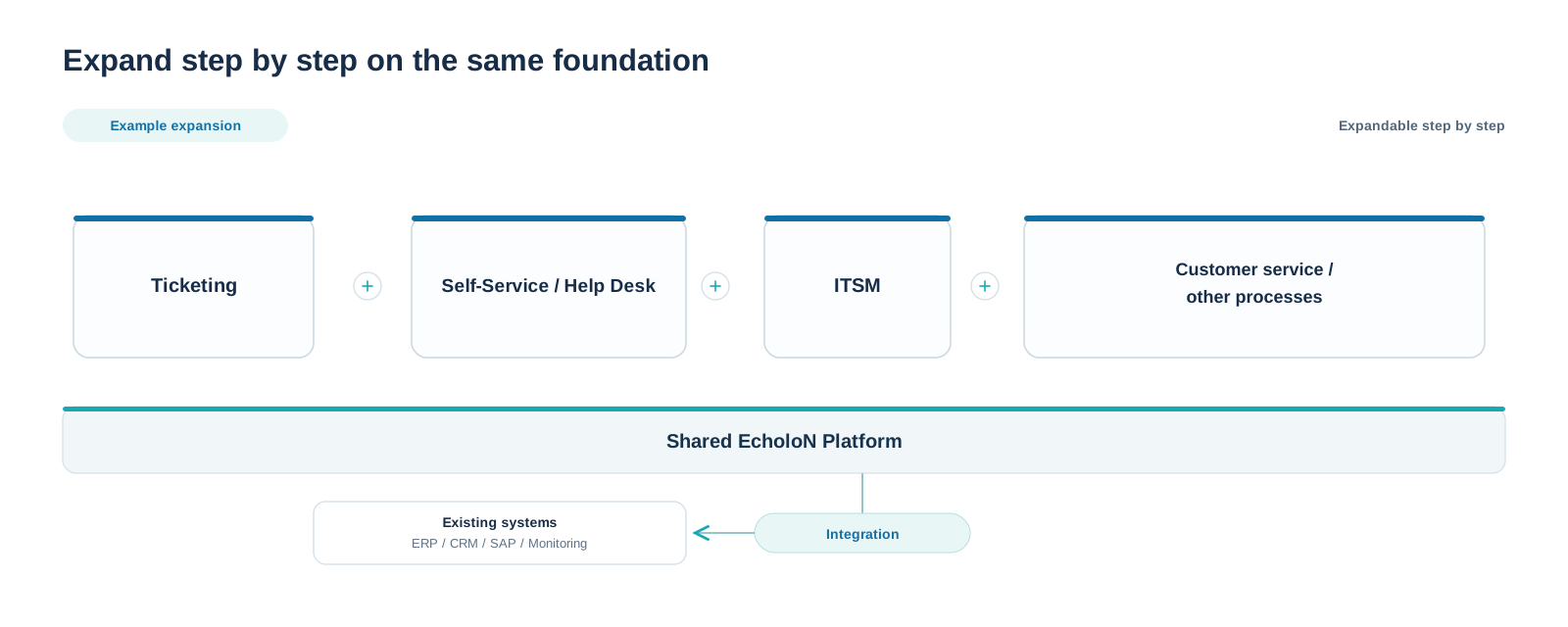
A Shared Technical Platform Instead of New Siloed Solutions
Tickets, data, forms, roles, knowledge, workflows, reporting, and integrations are all based on the shared EcholoN software platform. This allows a company to start with a defined ticket process and later add additional service or business processes without necessarily having to introduce a separate application for each new requirement.
Configurable Processes and Interfaces
Ticket types vary depending on the organization, target audience, and service. EcholoN allows you to customize forms, fields, categories, roles, and processing paths to fit the specific use case. The scope and implementation depend on the edition and project requirements.
Workflow Engine as Common Process Logic
The EcholoN Workflow Engine is deployed system-wide. It can support simple automations as well as multi-step workflows involving tasks, conditions, notifications, decisions, or approvals. As a result, the process logic is not limited to mere ticket forwarding.
Existing Applications Remain Part of the System Landscape
EcholoN does not necessarily have to replace ERP, CRM, SAP, monitoring, or other line-of-business applications. Required data and process steps can be incorporated into the respective processing context via available interfaces and project-specific integrations.
Choice of Operating Model
EcholoN supports cloud/SaaS, on-premises, managed service, and hybrid scenarios. This allows the operating model to be aligned with the company’s infrastructure, responsibilities, and IT strategy.
Gradual Expansion
The initial implementation can be limited to ticket management. As requirements grow, self-service, help desk, service desk, ITSM, customer service, or cross-functional processes can be added, depending on the edition and target vision.
Start with a standardized setup. Configure individually. Expand step by step.
When is a ticketing system sufficient- and when is more needed?
The terms “ticketing system,” “help desk,” and “service desk” are not used uniformly in the market. Their functional boundaries also overlap. The following categorization is therefore not a universally applicable product classification, but rather a decision-making guide based on organizational focus.
| If you primarily want to… | Appropriate Focus | Further Information |
|---|---|---|
| Centrally record, structure, assign, and track requests | Ticket-System | this Page |
| Structure operational support with a support organization, knowledge base, and defined escalation paths | Help Desk | EcholoN Help Desk Software |
| Organize a central point of contact for users and the processing of defined services and service requests | Service desk | EcholoN Service Desk Software |
| want to integrate multiple ITSM practices such as Incident Management, Problem Management, Change Enablement, Service Configuration Management, or Service Level Management | IT Service Management | EcholoN IT Service Management |
| want to connect services and workflows from multiple departments on a shared platform | Enterprise Service Management | EcholoN Enterprise Service Management |
A ticket system is often sufficient when the primary goal is centralized and traceable case handling. As soon as defined services, more comprehensive service levels, multiple ITSM practices, or cross-departmental processes are added, the appropriate expansion level should be planned from the outset.
What to Consider When Choosing a Ticket System
| Test Question | Why This Is Important Before Making a Decision |
|---|---|
| What types of requests need to be handled? | IT issues, customer inquiries, and internal services require different data and processing workflows. |
| Through which channels do requests come in? | Emails, phone calls, portal submissions, forms, and system notifications must be effectively consolidated into a single case. |
| What ticket data is required? | Complete and consistent information forms the basis for assignment, automation, and reporting. |
| What roles and permissions are needed? | Internal agents, external customers, partners, and managers should not automatically have access to the same data and functions. |
| How are priority and responsibility determined? | Clear rules prevent manual distribution and ambiguous responsibilities. |
| What time targets and escalation procedures apply? | Response, resolution, or contractual targets must be measurable and controllable within the process. |
| Which steps should be automated? | Recurring tasks, notifications, approvals, and status changes typically offer potential for automation. |
| What systems and data are required? | Integrations should be planned based on data source, direction, timeliness, and responsibility. |
| What analytics are expected? | Categories, statuses, and time data must be captured in such a way that the desired metrics are truly reliable. |
| Which operating model aligns with the IT strategy? | Cloud, on-premises, managed service, and hybrid scenarios differ in terms of operations and responsibilities. |
| What security and operational requirements apply? | Login and identity integration, roles, data protection, logging, data backup, availability, and operational responsibility should be specifically reviewed for the selected scenario. |
| What data needs to be migrated from the legacy system? | Master data, open tickets, and histories have different business and technical requirements. |
| What future expansions are foreseeable? | Self-service, help desk, ITSM, or other business units should be considered when selecting a platform and edition. |
The EcholoN Edition Overview helps with the initial assessment. Which edition and configuration are actually suitable should be determined based on the specific process and the required functions.
Implementation and Migration of a Ticketing System
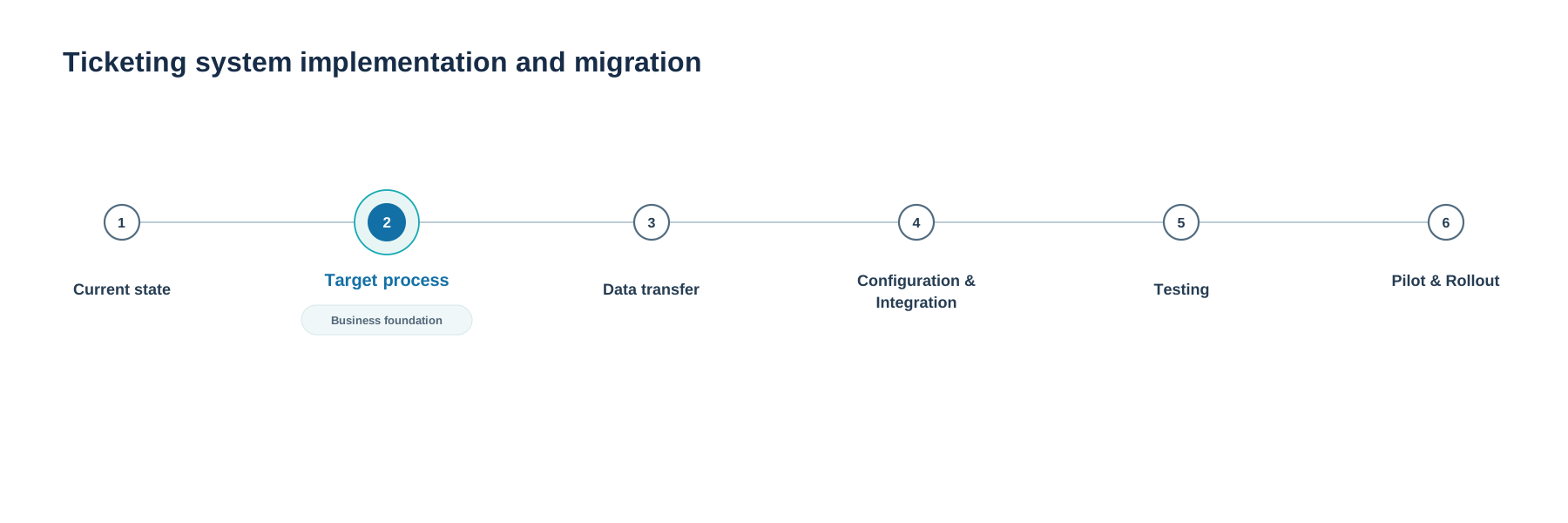
The implementation does not begin by adopting all existing fields, but rather by addressing how requests should be handled in the future. A robust approach typically includes:
- Assess the current situation: Identify ticket types, intake channels, roles, responsibilities, time targets, reports, and existing systems.
- Define the target process: Define required fields, categories, priorities, processing statuses, handoffs, and escalation paths.
- Scope the data migration: Determine which master data, open tickets, attachments, and historical cases are functionally required.
- Implement configuration and integration: Set up forms, roles, workflows, reports, and required interfaces.
- Test with real cases: Test typical, critical, and rare ticket types with the intended user groups.
- Pilot and roll out: Put a clearly defined area into production, evaluate the results, and connect additional teams in a controlled manner.
Not every implementation requires the same level of data migration. The unchecked transfer of entire legacy data sets can lead to unnecessary effort and poor data quality. Therefore, the scope, cleansing, and business use of the legacy data should be determined before the technical migration.
Frequently Asked Questions About Ticket System Software
Can an email be automatically converted into a ticket?
Yes. Email can be integrated into the ticket processing system as an incoming channel. Depending on the configuration and process, the sender, subject, message, and attachments are assigned to the ticket and used for further structuring.
Can tickets be automatically assigned and escalated?
Yes. Rules and workflows can evaluate existing ticket information and, based on that, trigger assignments, tasks, notifications, follow-ups, status changes, or escalations. The specific scope depends on the edition and configuration.
Can a ticket system be used by multiple departments?
Yes. Different departments can have their own forms, categories, roles, and workflows while still using the same technical platform. If multiple departments need to organize shared services and processes on a single platform, an enterprise service management approach may be appropriate.
Can an existing ticket system be replaced?
Yes. Before the replacement, it should be determined which master data, open cases, attachments, and histories need to be transferred. Interfaces, roles, reports, and the transition period between the old and new systems should also be included in the migration plan.
What interfaces does EcholoN offer?
EcholoN can utilize APIs, web services, connectors, and project-specific integrations. Which connection is available and appropriate must be evaluated based on the specific target system, the required data, and the process.
How much does the EcholoN ticketing system cost?
The costs depend, among other factors, on the edition, user and operational scenarios, configuration, integrations, and scope of implementation. A reliable estimate therefore requires knowledge of the specific use case. As a starting point, you can compare the EcholoN editions.
Get to Know EcholoN with Your Own Ticket Process
A ticket system shouldn’t just display tickets. What really matters is whether it effectively maps your actual requests, roles, information, time targets, and processing workflows.
In a personalized demo, we can therefore examine a specific process from your organization—for example, from incoming email through categorization, prioritization, and automatic assignment to processing, escalation, resolution, and analysis.
This will allow you to assess:
- how your ticketing process can be mapped in EcholoN,
- which data and existing systems should be integrated,
- which edition and operating model are the best fit,
- and which future expansion stages make sense.