

Commissioning follows a clear procedure: planning, reviewing documentation, inspecting the installation, conducting preliminary tests, controlled system startup, testing functions, evaluating trial operation, and documenting acceptance. A system is considered ready for operation only after tests have been passed, defects have been corrected, and formal approval has been granted.
For electrical systems, the requirements of DIN VDE are particularly relevant. Visual inspections, measurements, functional tests, safety checks, and complete documentation form the basis for safe and standards-compliant operation. Conversely, faulty or incomplete commissioning increases the risk of malfunctions, failures, safety deficiencies, and liability issues
What does the commissioning process involve?
Definition and significance of commissioning
Commissioning encompasses all the steps required to bring a system, plant, or device into productive operation. This typically takes place after installation and before actual use. Commissioning ensures that all components are functioning properly and that the requirements of DIN VDE are met. A properly executed process minimizes the risk of operational malfunctions and increases safety for all users.
Steps in the Commissioning Process
The process consists of several steps that must be carried out systematically. First, the installed components are inspected to ensure that all parts are installed in accordance with the technical specifications. Functional tests are then performed to verify the proper operation of the system. This can be done both electrically and mechanically, depending on the type of system. After the inspection and tests, the commissioning is documented. This provides proof of the proper execution of all work steps in the commissioning process.
Important aspects of commissioning
A fundamental aspect of commissioning is compliance with the relevant standards and regulations according to DIN VDE. Equally important is the training of the personnel responsible for operating and maintaining the system. Adequate training ensures that users understand how the system works and are able to quickly identify and resolve problems. Commissioning should also include the creation of a maintenance plan that ensures regular maintenance and monitoring of system safety.
-
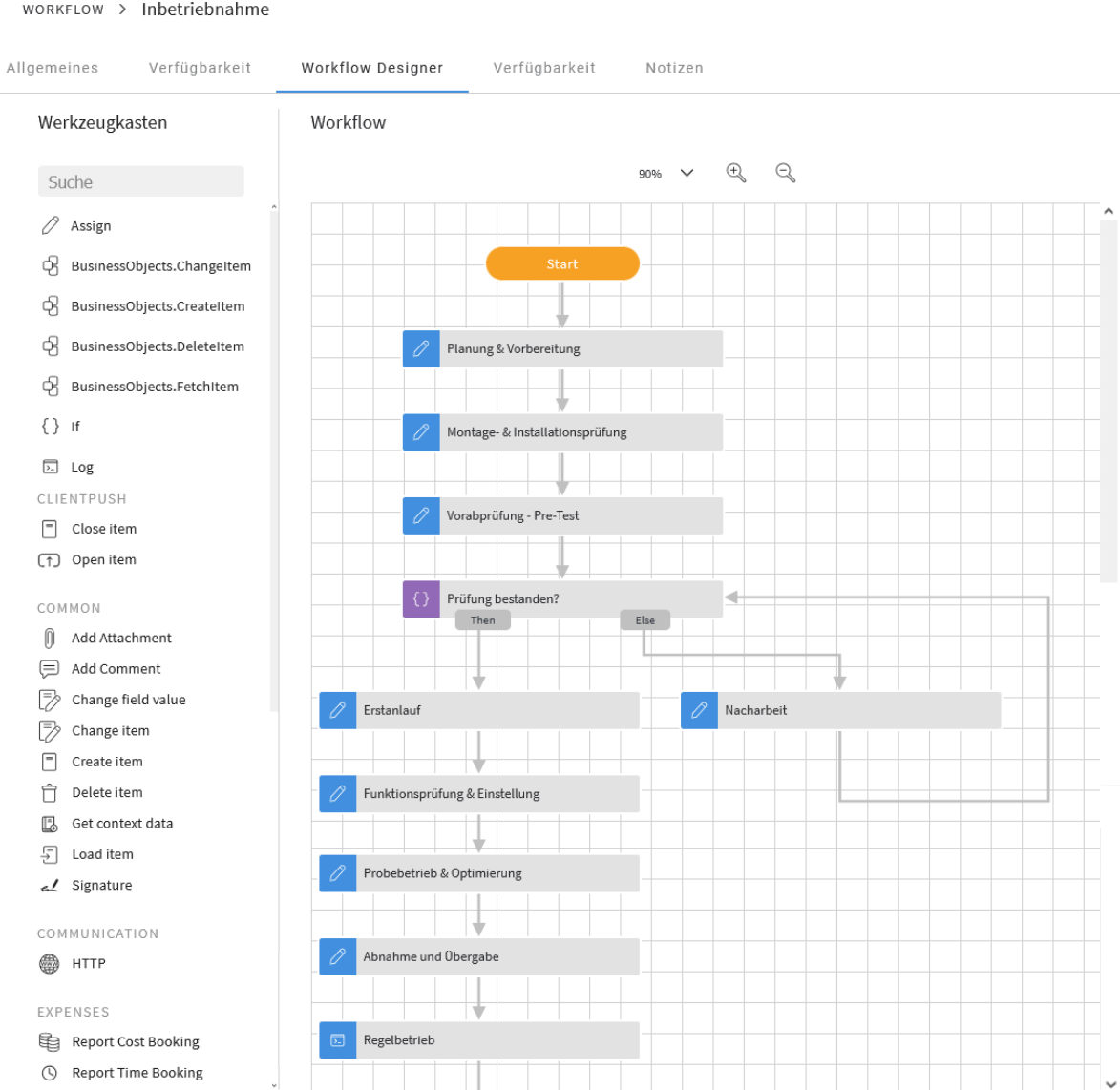
Planning & Preparation
1Planning & Preparation: Development of the IBN concept, scheduling, resource and staff planning, definition of the test steps.
-
Documentation review
2Documentation review: Checking circuit diagrams, technical specifications, approvals and declarations of conformity for completeness and accuracy.
-
Assembly and installation inspection
3Visual inspection of the mechanical and electrical installation, check for completeness, verification of labelling and safety measures.
-
Preliminary tests
4Measurements carried out without operating voltage or pressure: insulation resistance, continuity testing, pressure tests, protective conductor tests.
-
Decision point
5If defects are found, rectification work and a re-test must be carried out before proceeding.
-
Initial start-up (Energising)
6Initial start-up (Energising): First power-up under controlled conditions, safety checks, verification of basic functions.
-
Functional testing & adjustment
7Calibration of sensors and actuators, parameterisation of control systems (PLCs, frequency converters), inspection of all safety devices.
-
Trial operation & optimisation
8Load run under conditions relevant to actual operation, performance tests, fine-tuning of control parameters, documentation of deviations.
-
Acceptance & Handover
9Preparation of the commissioning report, handover documentation, operator training and formal approval for regular operation.
How is proper commissioning documented?
Required documents and records
Documentation is a fundamental part of the commissioning process. Required documents and records include installation manuals, test certificates, and reports on tests performed. These documents should be made available in an easily accessible format, such as PDF or a web link to a service portal, to facilitate easy access. Additionally, the documents should comply with the specific requirements and standards of DIN VDE.
Proof and Documentation of Commissioning
Verification of commissioning is provided through detailed reports that record all work steps performed and test results. This documentation is relevant not only for internal purposes but also for external inspections and audits. Complete documentation helps ensure the quality of the commissioning and clarify potential liability issues. Furthermore, the reports can serve as a reference for future commissioning or maintenance work.
Submission of Documents During Commissioning
During commissioning, the relevant documents must be submitted to demonstrate compliance with standards and regulations. This can be done by presenting test reports or certificates confirming that the system is operating properly and has passed all relevant tests. It is good practice to store all documents centrally so that they are available at any time.
What types of commissioning are there?
Different Types of Commissioning
Commissioning can be divided into different types, depending on the type of system and specific requirements. These include the commissioning of electrical systems, mechanical systems, and even services. Each type presents its own challenges and requirements that must be taken into account during the process. Careful planning and detailed implementation are particularly necessary for more complex project segments.
Electrical vs. Mechanical Commissioning
Electrical commissioning focuses on the inspection and testing of electrical components. This includes ensuring that all protective devices and controls are functioning properly. In contrast, mechanical commissioning concentrates on the physical aspects of the system, such as testing moving parts and their interactions. Both types of commissioning are fundamental to the overall functionality of the system and require specific expertise from electrical specialists and technicians.
Special requirements for specific systems and equipment
In addition to general commissioning procedures, there are special requirements that must be taken into account depending on the type of system. For example, when commissioning medical devices or systems for power generation, water purification, and even heating, ventilation, and air conditioning (HVAC) systems, special regulations must be followed to ensure, for instance, energy efficiency. These requirements may include additional testing and documentation to ensure that the system complies with applicable medical or environmental standards.
What does a step-by-step commissioning guide look like?
Preparing for Commissioning
Preparing for commissioning is the first step in the process. This requires thorough planning that takes into account all relevant aspects of the system. First, all necessary materials, tools, and testing and measuring equipment should be provided. Next, it is important to inform everyone involved, including specialists and technicians, about the procedure. Clear communication ensures that everyone involved is working toward the same goals and is prepared for potential issues.
Conducting the Commissioning
Conducting the commissioning requires precision and care. Every component or assembly must be carefully tested and inspected. This ensures that all components are functioning properly. All tests are properly documented. This ensures that proper proof of commissioning is recorded. It is also important to watch for any issues during this phase and make immediate adjustments if necessary. The process should be supervised by experienced commissioning engineers and specialists. This ensures that all steps are carried out in accordance with applicable standards and regulations.
Maintenance and Follow-Up After Commissioning
After commissioning, maintenance and follow-up are of great importance to ensure the long-term functionality of the system. Regular inspection and maintenance help identify potential problems early on and extend the system’s service life. Maintenance schedules should be created and documented accordingly to ensure that all necessary tasks are performed on time. Furthermore, the results of maintenance work should be tracked to evaluate the effectiveness of the measures taken.
Why is a flawless commissioning process important for operations?
The Role of Commissioning in Plant Safety
Commissioning plays a central role in plant safety. A properly executed commissioning process ensures that all parts and components are safe and functional. This reduces the risk of failures and accidents that could endanger both people and the environment. Companies must be aware that commissioning is not only a legal requirement but also a critical and essential part of effective safety management.
Consequences of Improper Commissioning
Improper commissioning can have serious consequences, ranging from financial losses to severe accidents. If systems are not commissioned properly, this can lead to technical malfunctions, inefficient operation, and, in the worst case, accidents that endanger human lives. Therefore, it is of the utmost importance that all steps are carried out thoroughly and in accordance with the established parameters.
Best Practices for Avoiding Commissioning Problems
To avoid commissioning problems, companies should implement best practices. This includes providing training for all employees involved in commissioning, as well as complying with all relevant standards and regulations. Regular inspections and audits can also help identify and address potential weaknesses in the process. Furthermore, a culture of safety and quality should be fostered to ensure that all employees understand the importance of proper commissioning and act accordingly.
“A system is not considered to have been successfully commissioned simply because it can be switched on. Only a process that has been verifiably tested, documented and approved lays the foundation for safe and consistently reliable operation.” – Jochen Möller, Managing Director of mIT solutions GmbH and co-founder of EcholoN
Frequently Asked Questions (FAQ) - Commissioning
What is commissioning?
Commissioning refers to the controlled transition of a plant, machine, system, or device from the installed state to the operational state. During this process, it is verified that all components are correctly assembled, connected, adjusted, and functional. The goal is to ensure safe, standards-compliant, and trouble-free operation. For electrical systems, testing prior to initial use is a particularly crucial part of commissioning.
When is commissioning required?
Commissioning is always required when a new system is installed, a system is used for the first time, or an existing system has been significantly modified, expanded, or repaired. For electrical systems, it must be verified before initial use or before recommissioning that the system is in proper and safe condition. DIN VDE 0100-600 describes the initial inspection of low-voltage electrical systems for this purpose.
What role does DIN VDE play in commissioning?
The DIN VDE standards specify technical requirements for the safety, testing, and operation of electrical systems. DIN VDE 0100-600 is particularly relevant for the initial inspection prior to commissioning. It describes how electrical systems must be inspected before they are put into operation. This includes, among other things, visual inspection, testing, measurement, and the documentation of test results.
What steps are involved in proper commissioning?
Proper commissioning begins with a visual inspection of the installed components and connections. This is followed by technical inspections, measurements, and functional tests. The results are then evaluated, deviations are corrected, and approval for operation is documented. Depending on the system, this may also include parameterization, software tests, safety checks, trial operation, and training for operating personnel.
Who is authorized to perform commissioning?
Commissioning should be performed by qualified technical personnel. For electrical systems, a certified electrician is required who is thoroughly familiar with the technical regulations, safety measures, and testing procedures. The operator or contractor remains responsible for ensuring that the system is operated only in a safe and tested condition. Improper commissioning can lead to safety risks, liability issues, and operational disruptions.
What types of commissioning are there?
Typical types include initial commissioning, recommissioning, partial commissioning, and trial commissioning. Initial commissioning takes place before a new system is operated for the first time. Recommissioning becomes relevant after modifications, repairs, or downtime. Partial commissioning applies to individual system components, while trial commissioning serves to test functions under controlled conditions.
What tests are required before commissioning electrical systems?
Before commissioning electrical systems, three test steps are particularly relevant according to DIN VDE 0100-600: inspection, testing, and measurement. During inspection, for example, it is checked whether equipment, protective measures, wiring, and connections are correctly installed. During testing, functions and protective mechanisms are tested. During measurement, electrical parameters are checked, among other things, to verify the safety of the system.
Why is commissioning documentation so important?
The documentation proves that the system has been tested, evaluated, and approved for operation. It typically contains test results, measured values, deviations, corrective actions, responsible parties, and approvals. Accurate documentation is essential for operational safety, compliance requirements, maintenance, future inspections, and potential liability or insurance issues. Without complete documentation, it is nearly impossible to verify whether commissioning was performed in accordance with standards.
What happens if a system is operated without proper commissioning?
If a system is operated without proper commissioning, the risk of malfunctions, failures, property damage, and personal injury increases significantly. In the case of electrical systems, inadequate protective measures, incorrect connections, or undetected defects can have serious consequences. Additionally, legal and organizational risks arise because, in the event of damage, operators must prove that the system was safely tested and properly approved.
Also of interest:
Field Service Management Software (FSM)
Customer Service & Support Software
Maintenance Software for Reliable Processes – EcholoN CMMS Software
- Blog Article: CMMS – Computerized Maintenance Management System
- Blog Article: Maintenance, Inspection, Overhaul, and Repair
- Blog Article: Field Service Management
- Blog Article: What is Preventive Maintenance?
- Blog article: What is Predictive Maintenance?
- Blog article: Maintenance and Repair – Relevant Key Performance Indicators (KPIs) via CMMS Software